
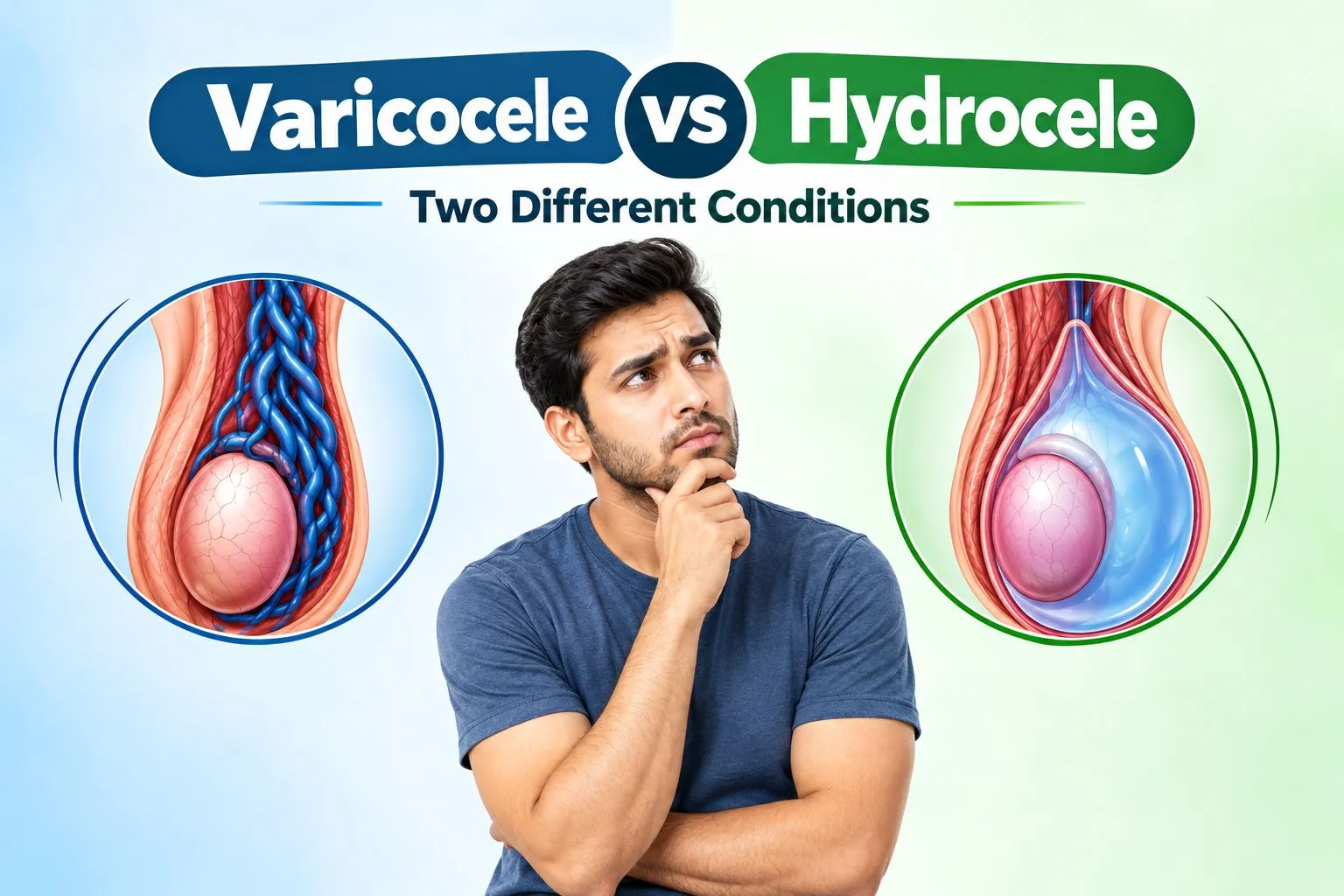
Hydrocele & Varicocele: Symptoms, Differences and Ayurvedic Care | Shiksha Ayurveda
Hydrocele & Varicocele: Understanding Scrotal Swelling and Your Care Options
Swelling, heaviness, or a dull ache in the scrotum can be worrying, and many men delay asking about it. Two of the most common causes are hydrocele and varicocele. They can look and feel similar, but they are different conditions with different causes, risks, and care paths. Knowing which one you have makes the next step much clearer.
Both conditions are common and usually manageable. At Shiksha Ayurveda, we believe a clear explanation is the first step towards the right care.
At a Glance
| Hydrocele | Varicocele | |
|---|---|---|
| What it is | Fluid collection around the testicle | Enlarged veins in the scrotum |
| Feels like | Smooth, fluid-filled swelling, usually painless | Soft, lumpy “bag of worms”; dull ache or heaviness |
| Usual side | Either side, or both | Most often the left |
| Who it affects | Newborns and men over 40 | Teens and men up to about 35 |
| Fertility link | Not usually | Can affect sperm quality in some men |
| Worse with | Gradual growth over time | Standing for long periods, straining, heat |
| Lying down | Swelling usually stays | Veins often reduce |
What Is Hydrocele?
A hydrocele is a collection of fluid in the thin sac surrounding the testicle, causing the scrotum to swell. It is usually painless.
Common causes include:
- A sac that did not close fully after birth (in infants)
- Infection or inflammation of the testicle or epididymis
- Injury to the scrotum
- Age-related changes in fluid balance
- Filarial infection in some regions
Many infant hydroceles resolve on their own within the first year or two. In adults, a hydrocele often stays the same or grows slowly.
What Is Varicocele?
A varicocele is an enlargement of the veins within the scrotum, similar to varicose veins in the legs. Blood pools in the veins because it does not drain efficiently, so they widen. It affects roughly 1 in 7 men.
Common signs include:
- A dull, dragging ache or heaviness, often worse in the evening or after standing
- Visible or palpable twisted veins
- A smaller testicle on the affected side
- Difficulty conceiving, in some cases
Many varicoceles cause no symptoms and are found during a routine check-up or fertility evaluation.
How Ayurveda Views These Conditions
Hydrocele is described in classical texts under Vriddhi, specifically Mutravriddhi or Udakavriddhi. It is understood as an imbalance of Kapha (fluid and heaviness) and Vata (obstructed movement).
Varicocele is not named identically in the classical texts. Practitioners often relate it to vascular swellings such as Siragranthi, with involvement of Rakta (blood) and Vata and Pitta imbalance. Interpretations vary between practitioners.
Traditional supportive care may include:
- Herbs. Punarnava, Gokshura, and Varuna for swelling and fluid balance. Guduchi, Manjistha, and Ashwagandha are traditionally used for circulation and reproductive vitality.
- Diet. Light, warm, freshly cooked food. Less heavy, oily, spicy, fermented, or cold food.
- Lifestyle. Avoid prolonged standing, heavy lifting, and tight clothing. Take regular breaks and avoid excess heat.
- Gentle yoga and breathing. Practices such as Pawanmuktasana and Pranayama, guided by your practitioner. Avoid poses that strain the groin.
These are supportive measures and should always be guided by a qualified Vaidya. Research on Ayurvedic treatment alone for either condition is limited, so it works best alongside proper medical evaluation.
Medical Evaluation and Options
A doctor can usually tell the two apart by physical examination, often confirmed with a scrotal ultrasound. A semen analysis may be advised if fertility is a concern.
Hydrocele
- Small, painless hydroceles can be watched.
- Large, uncomfortable, or persistent ones are usually treated with a minor surgical procedure.
Varicocele
- Mild cases without symptoms are usually monitored.
- Pain, a shrinking testicle, or fertility concerns may need a procedure such as varicocelectomy or embolization.
Do I Need to See a Doctor?
Yes, if you notice any new scrotal swelling, ache, or change in size, even if it is painless. Both conditions can look like other problems, including hernia, infection, or, rarely, a tumor, so a proper diagnosis comes first.
When to Get Medical Help Right Away
Seek urgent care if you notice:
- Sudden, severe testicular pain (possible testicular torsion, an emergency)
- Redness, warmth, or fever
- Rapid growth of the swelling
- Swelling that follows an injury
- A varicocele that appears suddenly, especially on the right side, or does not shrink when lying down
- A hard lump on the testicle
Your Care Roadmap
- Get a clear diagnosis. Confirm which condition it is and rule out hernia, infection, or tumor.
- Assess symptoms and fertility. Especially important for varicocele.
- Decide whether to watch or treat. Many small, painless cases only need follow-up.
- Add supportive Ayurvedic care. Diet, lifestyle, and herbs, guided by your Vaidya and agreed with your doctor.
- Track changes. Note any change in size, comfort, or symptoms over time.
- Know the warning signs. Keep the urgent symptoms above in mind.