

Hydrocele & Varicocele: Symptoms, Differences and Ayurvedic Care | Shiksha Ayurveda
Hydrocele and Varicocele: Understanding Scrotal Swelling and Your Care Options
What Is a Hydrocele?
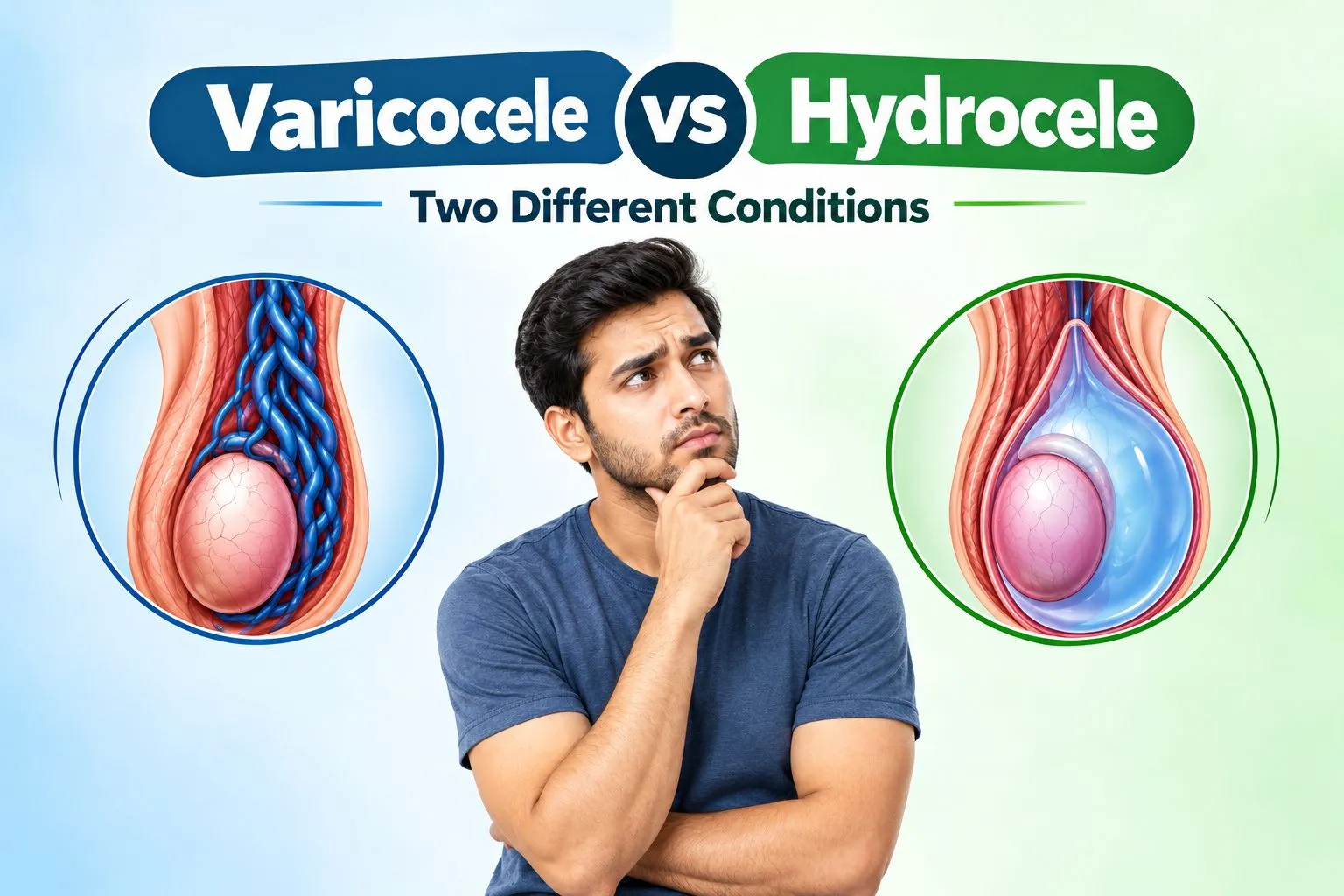
A hydrocele is a collection of fluid in the thin sheath that surrounds a testicle. As a result, the scrotum looks swollen, usually on one side. The swelling is typically painless, although a large hydrocele can feel heavy or uncomfortable.
Causes of hydrocele
Hydrocele is very common in newborn boys. In most babies, it disappears on its own within the first year. In adult men, however, the condition usually develops later in life. Common triggers include:
- Injury or trauma to the scrotum
- Infection or inflammation, such as epididymitis
- Age-related changes in fluid balance
- Rarely, a tumour or a hernia that affects fluid drainage
Symptoms of hydrocele
Most men notice a smooth, soft swelling in one side of the scrotum. Moreover, the swelling often looks larger by evening and smaller in the morning. Pain is uncommon. Nevertheless, a sudden increase in size or tenderness needs a prompt check-up.
What Is a Varicocele?
A varicocele is an enlargement of the veins inside the scrotum. Doctors often compare it to varicose veins in the leg. The veins widen because the valves inside them do not work well, so blood pools instead of flowing upward.
Causes and risk factors
Varicocele usually appears during puberty or young adulthood. It affects roughly 15 percent of men, and it occurs far more often on the left side. This pattern exists because of how the left testicular vein drains into the body. In rare cases, a sudden varicocele in an older man can signal a blockage elsewhere, so a doctor should always look into it.
Symptoms of varicocele
Many men have no symptoms at all. Others feel a dull ache or a sense of heaviness, especially after standing for long periods or exercising. In addition, the veins may feel like a soft “bag of worms” above the testicle. Lying down often eases the discomfort.

Hydrocele and Varicocele: Key Differences
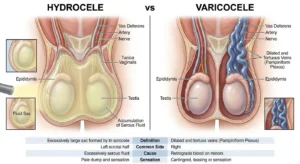
Although the two conditions look similar from the outside, they are not the same. The table below shows how they compare.
| Feature | Hydrocele | Varicocele |
|---|---|---|
| What happens | Fluid collects around the testicle | Veins in the scrotum enlarge |
| Typical feel | Smooth, soft, fluid-filled swelling | Soft, twisted, rope-like veins |
| Pain | Usually painless | Dull ache, often worse when standing |
| Affects fertility? | Rarely | Sometimes |
| Common age | Newborns and men over 40 | Teens and young adults |
| Main treatment | Observation or surgery | Observation or surgery |
Good to know: A man can have a hydrocele and a varicocele at the same time. For this reason, a proper examination matters more than self-diagnosis.
How Doctors Diagnose Scrotal Swelling
First, the doctor takes a medical history and examines the scrotum while you stand and lie down. Next, the doctor may shine a light through the swelling. A hydrocele lets light pass through because it holds clear fluid, whereas a solid lump does not.
In many cases, a scrotal ultrasound confirms the diagnosis. This painless scan shows whether the swelling comes from fluid, enlarged veins or something more serious. If fertility is a concern, a semen analysis may also help.
Treatment Options for Hydrocele and Varicocele
Treatment depends on your symptoms, your age and your goals. Many men need no procedure at all. Still, several effective options exist when the condition causes discomfort or other problems.
Hydrocele care options
- Watchful waiting: Small, painless hydroceles often need only regular monitoring. Babies usually outgrow them.
- Needle aspiration: A doctor drains the fluid with a needle. However, the fluid often returns, so this option suits only selected cases.
- Hydrocelectomy: A surgeon removes the fluid sac through a small cut. This surgery is the most reliable fix and usually allows same-day discharge.
Varicocele care options
- Observation: If you have no pain and no fertility concerns, regular check-ups are often enough.
- Pain relief and support: Over-the-counter pain medicine and supportive underwear can ease a dull ache.
- Varicocelectomy: A surgeon ties off the affected veins so blood flows through healthier ones. Doctors often recommend it for persistent pain, testicular shrinkage or fertility problems.
- Embolization: A radiologist blocks the faulty vein through a small tube. This option avoids a surgical cut and offers a quick recovery.
What recovery looks like
Most men return to desk work within a few days after either surgery. Furthermore, doctors usually advise avoiding heavy lifting and intense exercise for about two weeks. Your surgeon will give exact instructions based on your procedure.
When to See a Doctor
Do not ignore changes in the scrotum. Because some causes of swelling are urgent, book an appointment if you notice any of these signs:
- Swelling that grows or does not go away
- A hard, painless lump on the testicle
- One testicle that looks smaller than the other
- Redness, warmth or fever with scrotal swelling
- Difficulty conceiving after a year of trying
Seek emergency care right away if you feel sudden, severe testicular pain. This symptom can point to testicular torsion, which needs treatment within hours.