


Hydrocele in Ayurveda: Causes, Herbs and Natural Care | Shiksha Ayurveda
Hydrocele: Understanding the Swelling and Your Care Options
A hydrocele is a collection of fluid around a testicle, and it is one of the most common causes of scrotal swelling. Most cases are harmless and painless. Even so, any new swelling deserves a proper check, because other conditions can look similar. In this guide, you will learn what causes a hydrocele, how doctors diagnose it, and which care options can help.
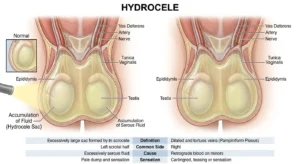
What Is a Hydrocele?
The testicles sit inside the scrotum, and each one has a thin, double-layered sheath around it. Normally, only a tiny amount of fluid lies between those layers. With a hydrocele, however, extra fluid builds up in that space. As a result, the scrotum looks larger on one side, or occasionally on both.
Hydrocele affects about 1 in 10 newborn boys. In adults, it appears most often after the age of 40. Fortunately, the condition rarely harms the testicle or affects fertility.
What Causes a Hydrocele?
The cause depends on age. Therefore, it helps to look at babies and adults separately.
Hydrocele in newborns
Before birth, the testicles descend from the abdomen into the scrotum. A small channel normally closes after that move. In some babies, however, the channel stays open, so fluid flows into the scrotum. Most infant hydroceles disappear on their own by the first birthday.
Hydrocele in adult men
In adults, the body produces more fluid than it can absorb. Several factors can trigger this imbalance:
- Injury or trauma to the scrotum
- Infection or inflammation, such as epididymitis
- Recent surgery in the groin or scrotum
- Age-related changes in fluid balance
- Rarely, a tumour or a hernia that blocks drainage
Sometimes doctors find no clear cause at all. In that case, the hydrocele is simply called idiopathic.
Hydrocele Symptoms
The main sign is a smooth, soft swelling in the scrotum. Most men feel little or no pain. Moreover, the swelling often looks smaller in the morning and larger by evening.
A large hydrocele can cause other problems. For instance, you may feel heaviness, notice skin stretching, or find it hard to wear tight clothes. Likewise, some men feel self-conscious about the change in appearance.

How Doctors Diagnose a Hydrocele
First, the doctor asks about your symptoms and examines the scrotum. Next, the doctor may shine a small light through the swelling. A hydrocele lets light pass through because it holds clear fluid, whereas a solid lump blocks it.
In most cases, a scrotal ultrasound confirms the result. This painless scan shows the fluid clearly. In addition, it rules out a tumour, a hernia or an infection. If infection is likely, the doctor may also order a urine test.
Hydrocele or varicocele?
People often confuse these two conditions. The table below shows the main differences.
| Feature | Hydrocele | Varicocele |
|---|---|---|
| What happens | Fluid collects around the testicle | Veins in the scrotum enlarge |
| Typical feel | Smooth, soft, fluid-filled | Twisted, rope-like veins |
| Pain | Usually painless | Dull ache, often when standing |
| Light shines through? | Yes | No |
Hydrocele Treatment Options
Many men need no treatment at all. Treatment becomes worthwhile when the swelling causes pain, discomfort or worry. Consequently, the right option depends on your symptoms and preferences.
Watchful waiting
Small, painless hydroceles often stay the same size for years. Your doctor will simply monitor them at regular visits. Likewise, doctors usually wait with babies, since most infant hydroceles resolve alone.
Needle aspiration and sclerotherapy
With aspiration, a doctor drains the fluid through a thin needle. Afterwards, the doctor may inject a solution that helps the sheath seal shut. This procedure takes little time. However, the hydrocele can return, so doctors reserve it for men who cannot have surgery.
Hydrocelectomy (surgery)
Hydrocelectomy is the most reliable way to fix a hydrocele. Under anaesthesia, the surgeon makes a small cut, drains the fluid and removes or repairs the sac. Most men go home the same day. Moreover, the chance of the swelling returning is low.
What recovery looks like
Mild bruising and swelling are normal for a few weeks. You can usually return to desk work within a few days. In addition, doctors advise avoiding heavy lifting and strenuous exercise for about two weeks. Your surgeon will give exact instructions for your case.
Good to know: Draining a hydrocele with a needle gives only temporary relief in many men. For a lasting result, surgery works best.
When to See a Doctor About a Hydrocele
Do not ignore a new swelling in the scrotum. Because some causes need urgent care, book an appointment if you notice any of these signs:
- Swelling that grows or does not go away
- A hard lump on the testicle
- Redness, warmth or fever
- Discomfort that affects daily life
Seek emergency care right away if you feel sudden, severe testicular pain. This symptom can signal testicular torsion, which needs treatment within hours.