
Varicocele: Symptoms, Causes and Ayurvedic Care | Shiksha Ayurveda
Varicocele: Symptoms, Causes and Ayurvedic Care
Varicocele Ayurvedic treatment interests many men who want a gentle, natural way to manage enlarged veins in the scrotum. A varicocele is common, and it often causes no trouble. However, it can bring pain, heaviness or fertility concerns. In this guide, you will learn the symptoms and causes of a varicocele, how Ayurveda views the condition, and what you should know before you choose any care option.
What Is a Varicocele?
A varicocele is an enlargement of the veins inside the scrotum. Doctors often compare it to varicose veins in the leg. Normally, one-way valves keep blood flowing upward from the testicle. When those valves fail, blood pools and the veins widen.
About 15 out of 100 men have a varicocele. It usually appears during puberty, and it occurs on the left side far more often than on the right. Moreover, a varicocele is one of the most common treatable causes of male infertility.
Varicocele Symptoms
Many men have no symptoms at all. Others notice one or more of the following signs:
- A dull, aching pain in the scrotum, especially after standing or exercise
- A feeling of heaviness on one side
- Visible or palpable twisted veins, often described as a “bag of worms”
- One testicle that looks smaller than the other
- Trouble conceiving after a year of trying
Typically, the discomfort eases when you lie down. Likewise, it often worsens by the end of a long day.
Causes and Risk Factors
The main cause is faulty valves in the veins that drain the testicle. The left testicular vein joins a larger vein at a steeper angle, so blood flows back more easily on that side. Several factors can make the problem worse:
- Long periods of standing or heavy lifting
- Constipation and straining
- A sedentary lifestyle and excess body weight
- Rarely, a blockage or tumour that presses on the vein
Therefore, a sudden varicocele in an older man always needs a doctor’s review.
The Ayurvedic View of Varicocele
Ayurveda does not use the word varicocele. Instead, practitioners relate it to Sira Granthi, which describes knotted or swollen veins. According to classical Ayurvedic theory, an imbalance of Vata and Rakta (blood) causes the veins to twist and swell. Consequently, Ayurvedic care aims to calm Vata, improve circulation and support healthy reproductive tissue.
Important: Scientific evidence for varicocele Ayurvedic treatment remains limited. Few high-quality clinical trials exist. For this reason, Ayurvedic care should support, not replace, a medical evaluation.
Varicocele Ayurvedic Treatment Options
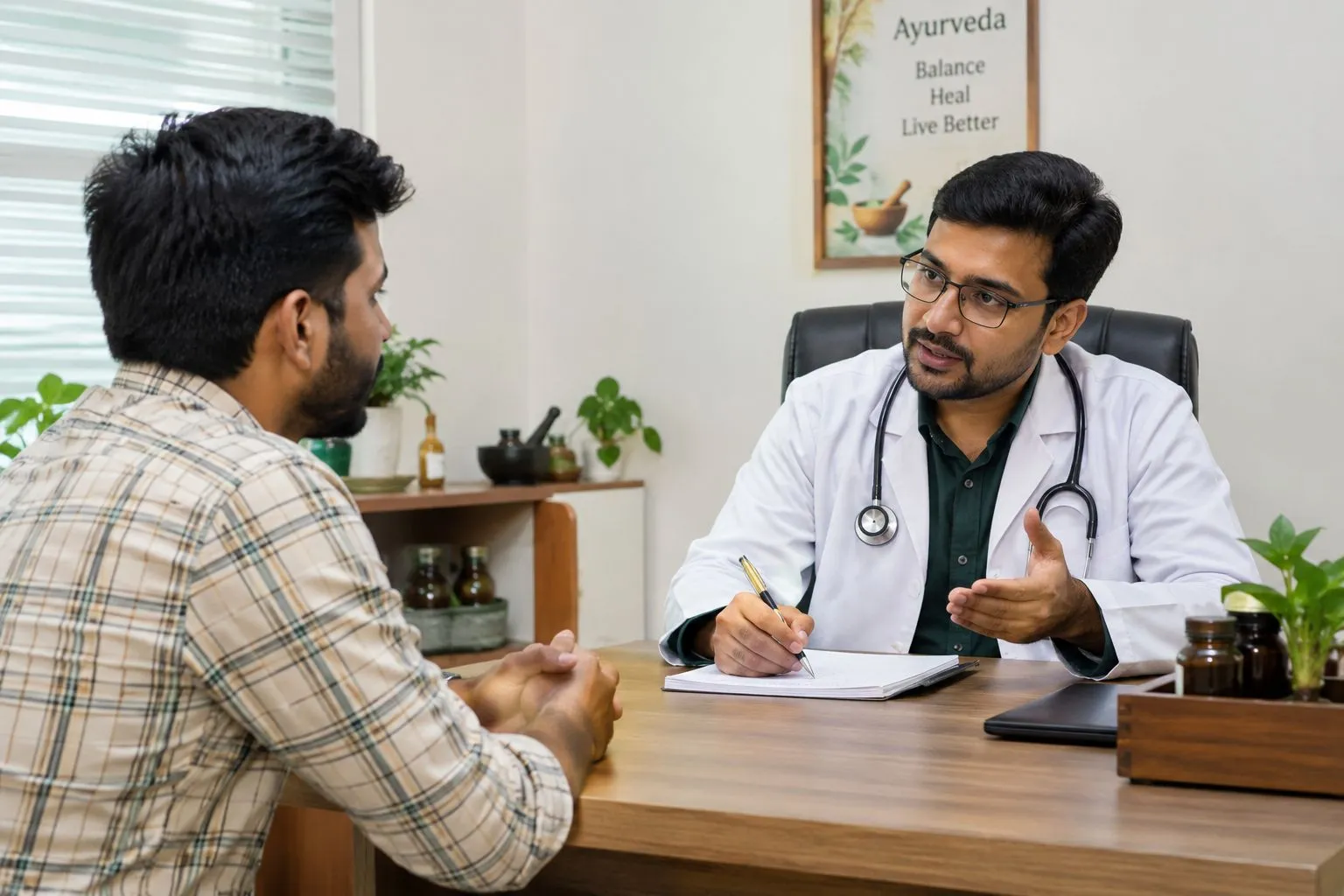
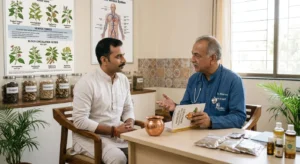
A qualified Ayurvedic physician usually designs a plan around your body type, symptoms and goals. The sections below describe the approaches most often used.
Herbal support in varicocele Ayurvedic treatment
Practitioners commonly suggest herbs for circulation, inflammation and male reproductive health. Examples include:
- Ashwagandha: Traditionally used for stress and vitality, and studied for its effect on sperm quality.
- Gokshura: Used for urinary and reproductive health.
- Kanchanar Guggulu: A classical formula often chosen for swellings and lumps.
- Triphala: Eases constipation, which reduces straining.
- Punarnava: Traditionally used to reduce swelling and fluid retention.
Never start these herbs on your own. Doses vary, and some herbs interact with medicines.
Panchakarma therapies
Some clinics offer Panchakarma, a set of cleansing therapies. For instance, Basti (medicated enema) targets Vata, while Virechana (therapeutic purgation) targets excess Pitta and blood. In addition, practitioners sometimes use Jalaukavacharana (leech therapy) for swollen veins. Trained professionals must perform all of these under supervision, and they do not suit everyone.
Yoga and gentle exercise
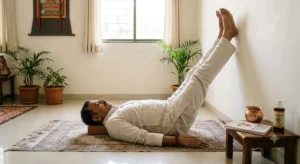
Certain yoga poses may reduce pressure in the pelvic veins. Practitioners often recommend Sarvangasana (shoulder stand) and Viparita Karani (legs-up-the-wall pose). Meanwhile, deep breathing helps lower stress. Avoid intense poses if they cause pain, and ask your instructor to adapt each movement.
Diet and Lifestyle Tips for Varicocele
Simple daily habits can ease discomfort. Furthermore, they support any treatment you choose.
- Eat fibre-rich foods: Fruits, vegetables and whole grains prevent constipation.
- Drink enough water: Good hydration supports healthy circulation.
- Wear supportive underwear: Snug support reduces the dragging feeling.
- Avoid long standing and heavy lifting: Take short breaks to sit or walk.
- Keep a healthy weight: Extra weight raises pressure on the veins.
- Limit tobacco and alcohol: Both can harm sperm health.
When Modern Treatment Is the Better Choice
Ayurvedic care may ease mild symptoms. Nevertheless, it cannot repair a damaged vein valve. Doctors recommend a procedure when you have any of these concerns:
- Persistent or worsening pain
- Testicular shrinkage
- Abnormal semen results with fertility concerns
- A varicocele in a teenager that slows testicular growth
Two main procedures exist. In a varicocelectomy, a surgeon ties off the affected veins so blood flows through healthier ones. In embolization, a radiologist blocks the faulty vein through a small tube. Both options have proven results, and recovery is usually quick.
| Approach | Best for | Evidence |
|---|---|---|
| Ayurvedic care and lifestyle changes | Mild symptoms, supportive care | Limited |
| Observation | No pain, no fertility concerns | Strong |
| Varicocelectomy or embolization | Pain, shrinkage, infertility | Strong |
See a doctor first. Get a proper diagnosis, ideally with a scrotal ultrasound, before you try any form of varicocele Ayurvedic treatment. Then, discuss your options with both a urologist and an Ayurvedic.