

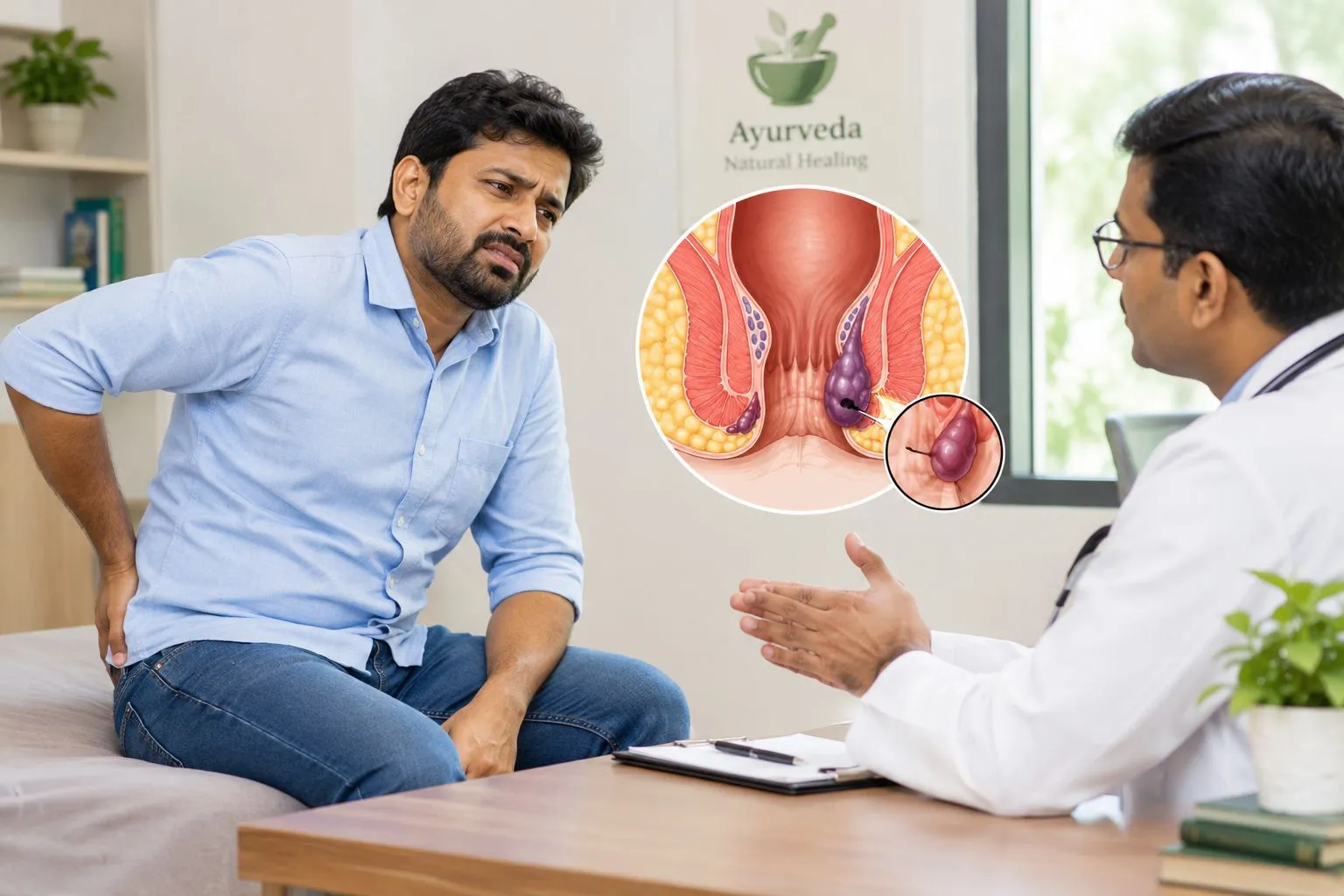
Piles (Arsha): Symptoms, Causes and Ayurvedic Treatment | Shiksha Ayurveda
Piles (Hemorrhoids): Understanding the Problem and Your Care Options
Piles treatment begins with understanding what piles are, and why they bother so many people. Piles, also called hemorrhoids, are swollen veins in the lower rectum and around the anus. In fact, millions of adults develop them at some point. Fortunately, most cases respond well to simple care. In this guide, you will learn the symptoms and causes of piles. Then you will see the home and medical options that can bring relief.
What Are Piles?
Piles are cushions of tissue and blood vessels in the anal canal. Everyone has these cushions, and they help control bowel movements. However, they can swell and become irritated. When that happens, doctors call them hemorrhoids, or piles.
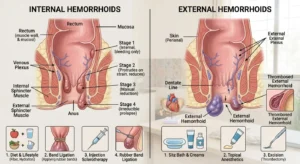
Internal and external piles
Internal piles form inside the rectum. You usually cannot see or feel them. As a result, bleeding is often the first sign. External piles form under the skin around the anus. Consequently, they cause more itching and pain.
Grades of internal piles
Doctors grade internal piles from one to four. In turn, the grade helps decide the best piles treatment.
| Grade | What happens |
|---|---|
| Grade 1 | Piles bleed but stay inside the rectum |
| Grade 2 | Piles slip out during a bowel movement, then return on their own |
| Grade 3 | Piles slip out, and you must push them back in |
| Grade 4 | Piles stay outside and cannot go back in |
Symptoms of Piles
Symptoms depend on the type of piles. For example, you may notice these common signs:
- Bright red blood on toilet paper or in the toilet bowl
- Also, itching or irritation around the anus
- Pain or discomfort, especially when sitting
- Sometimes, one or more tender lumps near the anus
- Finally, mucus discharge or a feeling that the bowel is not empty
Internal piles rarely hurt. In contrast, a clotted external pile (a thrombosed pile) can cause sudden, sharp pain and a hard, bluish lump.
What Causes Piles?
Pressure on the veins in the rectum makes them swell. Several everyday habits and conditions raise that pressure:
- Straining during bowel movements
- Chronic constipation or long-term diarrhoea
- Also, sitting on the toilet for long periods
- A low-fibre diet
- Likewise, pregnancy and childbirth
- Obesity and heavy lifting
- Ageing, since supporting tissues weaken over time
Moreover, genes play a role, so piles often run in families.

Piles Treatment at Home
Most mild piles settle with self-care within a week or two. Therefore, doctors usually suggest these steps first.
Eat more fibre and drink more water
Aim for 25 to 30 grams of fibre per day. Fruits, vegetables, oats, lentils and whole grains all help. In addition, drink plenty of water. As a result, stools soften and pass without straining, so the veins can heal.
Take warm sitz baths
Sit in a few inches of warm water for 10 to 15 minutes, two or three times a day. The warmth eases pain and itching. Afterwards, pat the area dry gently instead of rubbing.
Use over-the-counter creams carefully
Creams, ointments and suppositories can soothe symptoms for a short time. Hydrocortisone products, for instance, reduce itching. However, avoid using them for more than a week unless your doctor advises it, because they can thin the skin.
Change your toilet habits
- Go when you feel the urge, and do not hold it in.
- Next, avoid straining or sitting for long periods.
- Skip your phone in the bathroom.
- Finally, choose soft, unscented toilet paper or moist wipes.
Good to know: Regular walking keeps your bowels moving. Likewise, a small footstool under your feet can make passing stool easier.
Medical Piles Treatment Options
Sometimes home care is not enough. In that case, a doctor can offer several procedures. Of course, the best choice depends on the type and grade of your piles.
Office procedures for small to medium piles
- Rubber band ligation: The doctor places a tiny band around the base of an internal pile. Then the pile loses its blood supply and falls off within about a week. Doctors perform this procedure most often.
- Sclerotherapy: A solution injected into the pile shrinks it.
- Infrared coagulation: Meanwhile, a beam of heat makes the pile shrivel.
Surgery for large or severe piles
- Hemorrhoidectomy: The surgeon removes the piles completely. This option works best for large, grade 3 or 4 piles, and it gives the lowest chance of return. However, recovery takes a few weeks, and pain is common at first.
- Stapled hemorrhoidopexy: A stapling device lifts the pile back into place and cuts off its blood flow. Recovery is often faster, although piles may come back more often.
- Laser or Doppler-guided treatment: In addition, some centres offer these newer options for selected patients.
Your surgeon will explain the benefits and risks of each procedure. Moreover, you will learn what to expect during recovery.
How to Prevent Piles
You can lower your risk of piles with a few steady habits. First, eat fibre every day and drink enough fluids. Next, stay active. Furthermore, keep a healthy weight and avoid straining. Together, these steps also help prevent piles from returning after piles treatment.
When to See a Doctor About Piles
Do not assume that rectal bleeding comes from piles. Other conditions, including colorectal cancer, can cause the same symptom. Therefore, see a doctor if you notice any of these signs:
- Bleeding that continues, or that starts for the first time after age 40
- Also, piles that do not improve after a week of home care
- Severe pain or a hard, painful lump near the anus
- Similarly, a change in bowel habits, or black or tarry stools
- Piles that slip out and cannot go back in
Seek emergency care right away if you bleed heavily or feel dizzy, faint or weak.