
Piles (Arsha): Symptoms, Causes and Ayurvedic Treatment | Shiksha Ayurveda
Piles (Hemorrhoids) Understanding the Problem and Your Care Options
Pain, itching, or bleeding while passing stool can be worrying, and many people feel too embarrassed to talk about it. Piles are very common. Most people are affected at some point in their lives, and most cases can be managed well when they are understood and addressed early.
Piles affect both men and women, most often between the ages of 30 and 60. At Shiksha Ayurveda, we believe a clear explanation is the first step towards the right care.
What Are Piles?
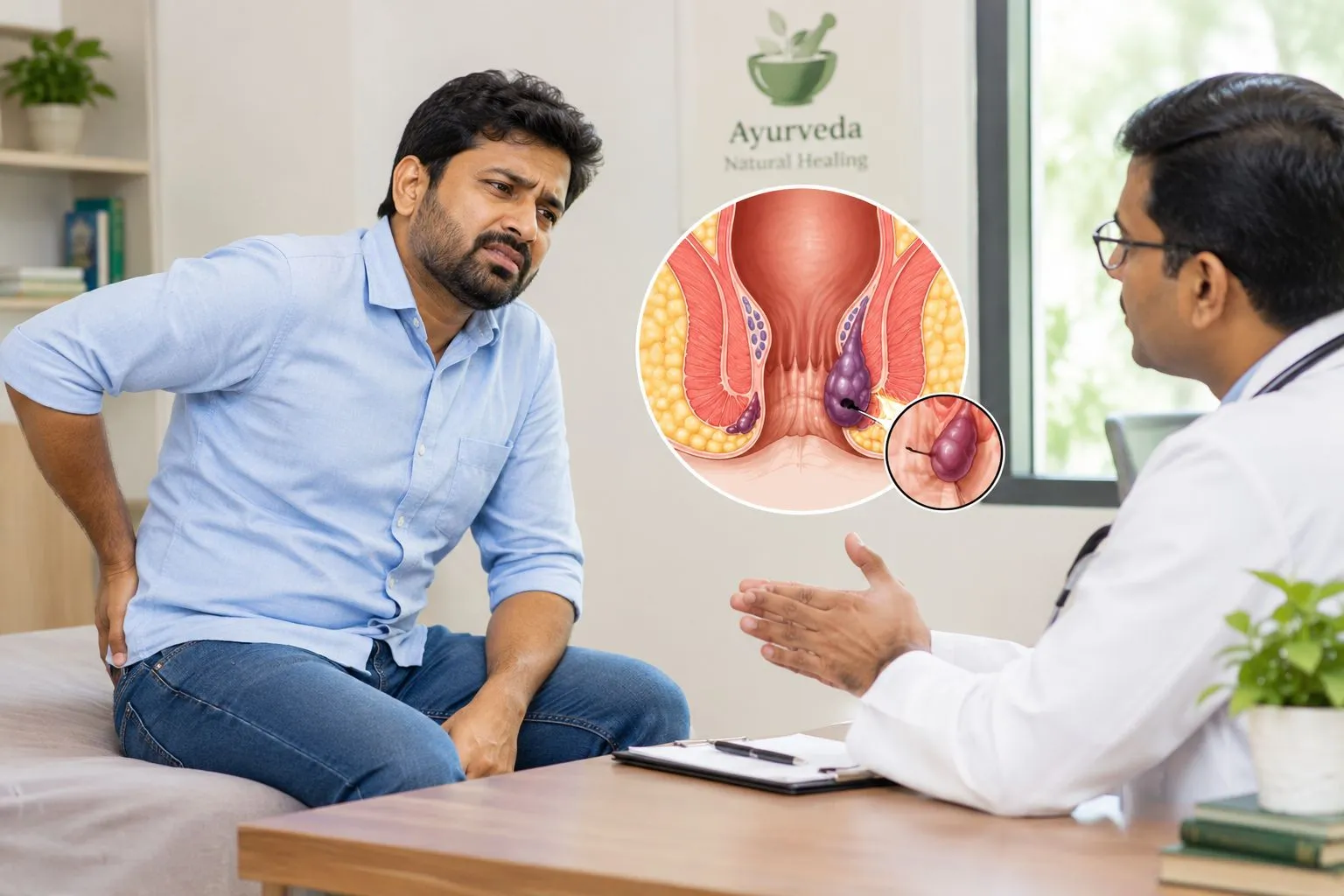
Piles, also called hemorrhoids, are swollen blood vessels in and around the anus and lower rectum. They can be:
- Internal. They form inside the rectum and are usually painless but may bleed.
- External. They form under the skin around the anus and can be painful, itchy, or swollen.
Common signs include:
- Bright red blood on the stool, on tissue paper, or in the toilet bowl
- Itching, irritation, or discomfort around the anus
- Pain, especially while sitting or passing stool
- A lump or swelling near the anus
- A feeling that the bowel has not emptied fully
- Mucus discharge or tissue that protrudes after passing stool
Common Causes and Risk Factors
- Chronic constipation and straining
- Low-fiber diet and low water intake
- Sitting for long periods, including a long time spent on the toilet
- Pregnancy and childbirth
- Obesity
- Heavy lifting
- Chronic diarrhoea
- Family history and aging
How Ayurveda Views Piles
Classical texts describe piles as Arsha. Ayurveda links them closely to weak digestion (Mandagni) and constipation, which cause Vata to move in the wrong direction and aggravate Pitta, Kapha, and blood (Rakta). The type of piles is described by the dominant dosha, such as dry piles (Shushka Arsha) and bleeding piles (Ardra Arsha).
Ayurveda treats the root cause, which is digestion and bowel habits, rather than just the swelling.
Traditional supportive care may include:
- Herbs and formulations. Triphala and Haritaki for bowel regularity. Traditional preparations such as Abhayarishta, Arshoghni Vati, and Kankayan Vati are used by practitioners according to the type of piles. Nagkesar and Kutaj are traditionally used for bleeding piles.
- Diet. A high-fiber diet with whole grains, fruit, vegetables, and plenty of water. Buttermilk (takra) and suran (elephant foot yam) are traditionally recommended.
- Foods to limit. Spicy, fried, heavy, and processed foods; excess tea or coffee; and alcohol.
- Sitz baths. Sitting in warm water or a medicated decoction for 10 to 15 minutes eases pain and swelling.
- Lifestyle. Regular meal times, daily exercise, not delaying the urge to pass stool, and not straining or sitting for long on the toilet.
- Yoga. Gentle practices such as Pawanmuktasana, Vajrasana, and Malasana, guided by your practitioner.
Para-surgical Ayurvedic procedures, such as Kshara Sutra, Kshara Karma, and Agnikarma, are used by trained practitioners for certain stages of piles. These should only be done by a qualified Ayurvedic surgeon after proper assessment.
All internal medicines and procedures should be guided by a qualified Vaidya. Some herbs are not suitable during pregnancy, so always inform your practitioner.
Stages of Piles
Doctors commonly describe internal piles in four grades:
| Grade | What happens |
|---|---|
| Grade 1 | Swelling inside the rectum, sometimes with bleeding. No protrusion. |
| Grade 2 | Protrude during passing stool but return on their own. |
| Grade 3 | Protrude and must be pushed back in manually. |
| Grade 4 | Remain outside and cannot be pushed back. |
Early stages often respond to diet, lifestyle, and supportive care. Advanced stages may need a procedure.
Medical Evaluation and Options
A doctor can usually diagnose piles by examination, sometimes with a short internal check (proctoscopy). Depending on your age and symptoms, further tests such as a colonoscopy may be advised.
- Home and supportive care. Fiber, fluids, sitz baths, and avoiding straining.
- Medicines. Stool softeners, topical creams, and pain relief.
- Minimally invasive procedures. Rubber band ligation, sclerotherapy, or infrared coagulation.
- Surgery. Hemorrhoidectomy or stapled procedures for large or advanced piles.
Do Not Assume Bleeding Is Always Piles
Rectal bleeding can also be a sign of other conditions, including anal fissure, inflammatory bowel disease, and colorectal cancer. This is especially important if you are over 40, have a family history, or the bleeding is persistent. Get a proper diagnosis before relying on any treatment.
When to See a Doctor Right Away
Seek medical help promptly if you notice:
- Heavy or repeated bleeding, or dark or black stool
- Dizziness, weakness, or pale skin (possible blood loss)
- Severe pain or a hard, very painful lump (possible thrombosed pile)
- A change in bowel habits lasting more than a few weeks
- Unexplained weight loss
- Bleeding that does not improve with treatment
- Fever with anal pain or swelling
Your Piles Care Roadmap
- Get a clear diagnosis. Confirm it is piles and rule out other causes of bleeding.
- Correct the cause. Improve digestion, fiber intake, hydration, and bowel habits.
- Use supportive care. Sitz baths, herbs, and diet guided by your Vaidya.
- Choose the right procedure if needed. For persistent, large or recurring piles.
- Prevent recurrence. Keep stools soft, stay active, and avoid straining.