Asthma (Tamaka Shwasa): Understanding Breathlessness and Your Care Options
Wheezing, a tight chest or a cough that comes back at night can be frightening, and many people accept them as “just a weak chest” for years. Asthma is a very common long-term condition of the airways. With the right diagnosis and a steady care plan, most people live active, full lives.
Asthma affects children and adults of all ages. At Shiksha Ayurveda, we believe a clear explanation is the first step towards the right care.
What Is Asthma?
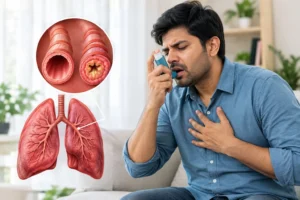
Asthma is a chronic condition in which the airways become inflamed and narrow and produce extra mucus. This makes breathing harder, especially when something triggers the airways. Symptoms come and go, and they vary from person to person.
Common signs include:
- Wheezing, a whistling sound when breathing out
- Shortness of breath
- Chest tightness
- A cough that is worse at night, early morning, or after exercise or laughing
- Symptoms that flare with colds, dust, smoke, or cold air
Common Triggers
- Dust, dust mites, and mold
- Pollen and seasonal changes
- Smoke, air pollution, and strong smells
- Cold air and weather changes
- Respiratory infections
- Exercise
- Pet fur
- Stress and strong emotions
- Certain medicines and foods in some people
Identifying your own triggers is one of the most useful steps in controlling asthma.
How Ayurveda Views Asthma
Classical texts describe breathing disorders under
Shwasa Roga, and the type closest to asthma is
Tamaka Shwasa. It is understood mainly as an imbalance of
Kapha and
Vata in the respiratory channels (
Pranavaha Srotas). Kapha causes mucus and congestion, while Vata disrupts the normal flow of breath. Weak digestion (
Mandagni), cold or heavy food, dust, and smoke are considered contributing factors.
Traditional supportive care may include:
- Herbs. Tulsi, Vasa (Adhatoda vasica), Pippali, Yashtimadhu (liquorice), Haridra (turmeric), and Sitopaladi Churna are traditionally used for cough and respiratory comfort. Preparations such as Talisadi Churna and Kanakasava are used by practitioners according to the person.
- Diet. Warm, light, freshly cooked food. Ginger, black pepper, and turmeric are used traditionally. Limit cold drinks, ice cream, curd at night, fried and heavy food, and anything you know triggers you.
- Steam inhalation. Warm steam, sometimes with Tulsi or Ajwain, can ease congestion for some people.
- Lifestyle. Regular sleep, keeping the home free of dust, avoiding smoke, and protecting yourself from cold air.
- Yoga and breathing. Gentle practices such as Anulom Vilom, Bhramari, Sukhasana, and Bhujangasana, guided by a trained teacher. Avoid forceful breathing techniques during a flare-up.
- Panchakarma. Treatments such as Swedana (herbal fomentation) and, in suitable cases, Vamana (therapeutic emesis) are described in classical practice. These should only be done by a qualified practitioner after proper assessment, and they are not suitable for everyone.
All Ayurvedic care should be guided by a qualified Vaidya. Research on Ayurvedic treatment for asthma is limited, so it is best used alongside your regular medical care.
Do Not Stop Your Inhalers
This is the most important safety point on this page. Asthma medicines, especially
preventer (controller) inhalers, keep the airways calm and prevent serious attacks.
Never stop, reduce, or replace prescribed asthma medicines with herbs or home remedies without your doctor’s advice. Stopping them suddenly can lead to a severe attack. Please also tell your doctor and your Vaidya about everything you are taking.
Medical Evaluation and Options
A doctor diagnoses asthma from your symptoms, history, and a breathing test such as
spirometry or a peak flow reading. Allergy testing may also be advised.
- Reliever inhalers. Quick-acting medicine for sudden symptoms.
- Preventer inhalers. Daily medicine that reduces airway inflammation.
- Allergy management. Avoid triggers and allergy treatment where needed.
- Asthma action plan. A written plan from your doctor that tells you what to do each day and during a flare-up.
- Vaccinations. Flu and other recommended vaccines help prevent infections that trigger attacks.
When to Get Emergency Help
Seek urgent medical care immediately if you or your child has:
- Severe breathlessness, or difficulty speaking in full sentences
- Lips or fingertips turning blue or grey
- A reliever inhaler that is not helping, or is needed more often than usual
- Chest tightness that keeps getting worse
- Drowsiness or confusion
- Ribs or neck muscles pulling in with each breath
A severe asthma attack is a medical emergency. Do not wait to see whether home remedies work.
Your Asthma Care Roadmap
- Get a clear diagnosis. Confirm asthma and rule out other causes of breathlessness.
- Know your triggers. Keep a simple diary of what brings on symptoms.
- Follow your medical plan. Use your inhalers exactly as prescribed.
- Add supportive Ayurvedic care. Diet, lifestyle, yoga, and herbs, guided by your Vaidya and agreed with your doctor.
- Review regularly. Track symptoms, medicine use, and breathing tests over time.
- Know the warning signs. Keep emergency contacts handy.